
Choosing the right scent is not just about smelling good — it’s about creating the right connection.
Why Fragrance Notes Matter in Product Design
Fragrance is not just an add-on — it’s a strategic tool for brand positioning, customer experience, and even purchase decisions. But not every scent fits every product. The same floral accord that works in a high-end perfume might fall flat in a home care product.
Choosing the right fragrance notes starts with understanding your product category — and how your customer interacts with it.
1. Fine Fragrance: Storytelling Through Scent
Fine fragrances (EDPs, perfumes, colognes) give you the most creative freedom. The user expects a complex, evolving scent structure — top, heart, and base notes should transition smoothly.
Best Notes for Fine Fragrance:
Top Notes: Bergamot, Pink Pepper, Grapefruit
Heart Notes: Jasmine, Rose, Iris, Ylang-Ylang
Base Notes: Sandalwood, Vanilla, Amber, Musk
Pro Tip: Think in “scenes” — what story do you want the fragrance to tell over time?
2. Personal Care: Gentle but Memorable
In personal care (shampoos, lotions, deodorants), skin compatibility and comfort come first. Fragrances should be pleasant, clean, and not overpowering. Long-lasting scents are valued, but subtlety is key.
Best Notes for Personal Care Products:
Top Notes: Cucumber, Green Apple, Pear
Heart Notes: White Flowers, Coconut Water, Lavender
Base Notes: Musk, Tonka Bean, Light Woods
Pro Tip: Consider how the fragrance performs in humid or warm environments — it’s on skin, after all.
3. Home Care: Freshness & Familiarity
Home care products like fabric softeners, surface sprays, or candles often evoke cleanliness, coziness, and comfort. The fragrance should support the product’s function (cleaning, relaxing, etc.).
Best Notes for Home Care Products:
Top Notes: Lemon, Eucalyptus, Mint
Heart Notes: Lilac, Rose, Cotton Blossom
Base Notes: Cedarwood, White Musk, Ambergris
Pro Tip: Choose notes that linger well in the air and feel “clean” even when they’re warm.

4. Cosmetics & Makeup: Delicate by Design
In cosmetics (lipsticks, foundations, creams), fragrance is more emotional — it adds luxury and intimacy. But it must be allergen-conscious and not interfere with skin feel.
Best Notes for Cosmetics:
Top Notes: Soft Citrus, Green Tea
Heart Notes: Powdery Florals, Peony, Freesia
Base Notes: Soft Vanilla, Cashmeran
Pro Tip: Go minimal. Let the texture and performance of the product shine through.
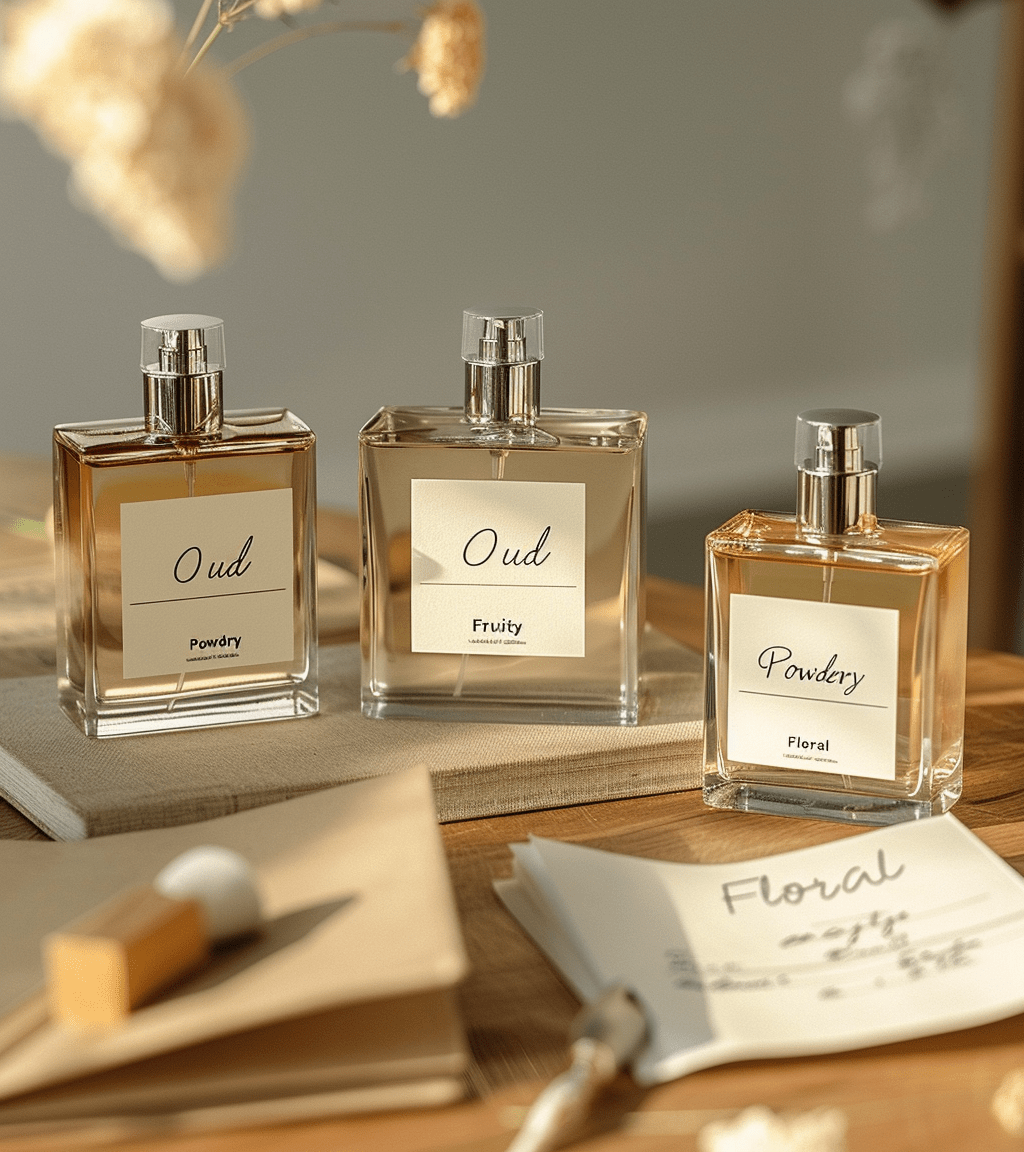
What to Avoid in the Wrong Categories
Some notes can be divisive if used in the wrong context. For example:
Heavy Oud in hand creams? Overwhelming.
Fruity notes in a kitchen cleaner? Confusing.
Powdery florals in a masculine cologne? Risky.
Always match your target audience, product function, and brand identity when selecting fragrance notes.
Final Thoughts: Let Your Product Lead the Way
At Perfume Prime, we believe fragrance should enhance the product, not distract from it. That’s why every formula we create is tailored not only to your scent preference — but to your product’s use case, surface, packaging, and purpose.