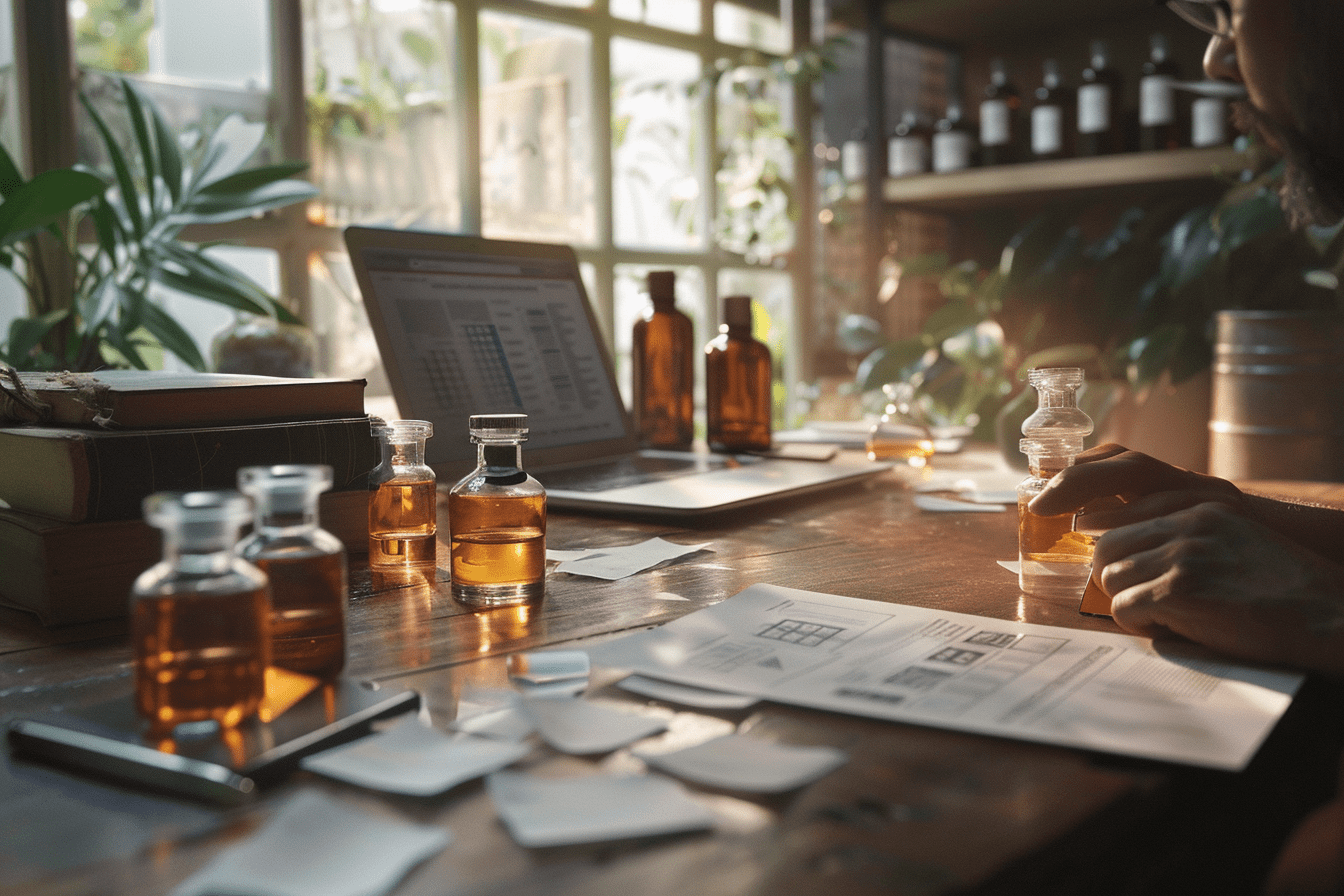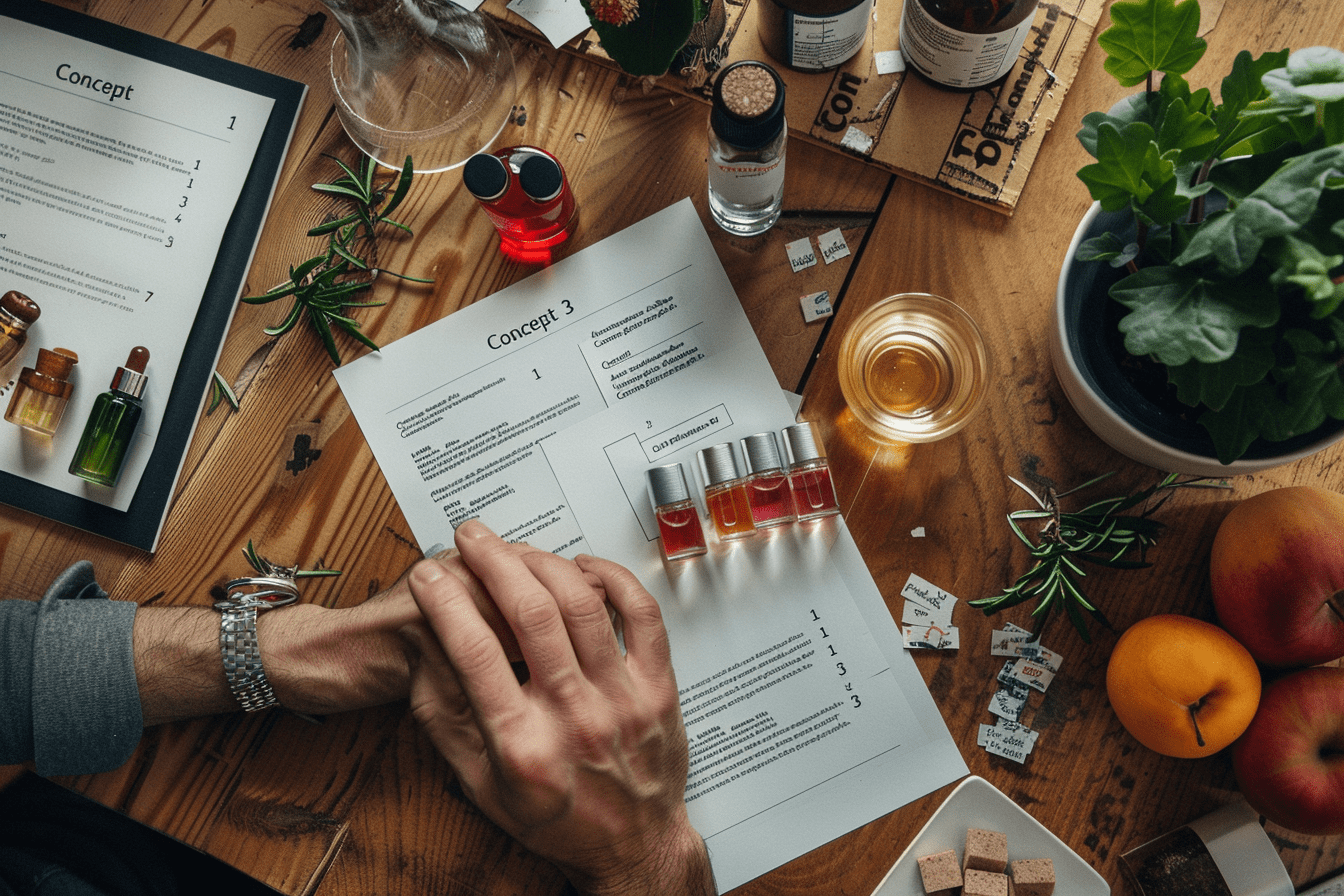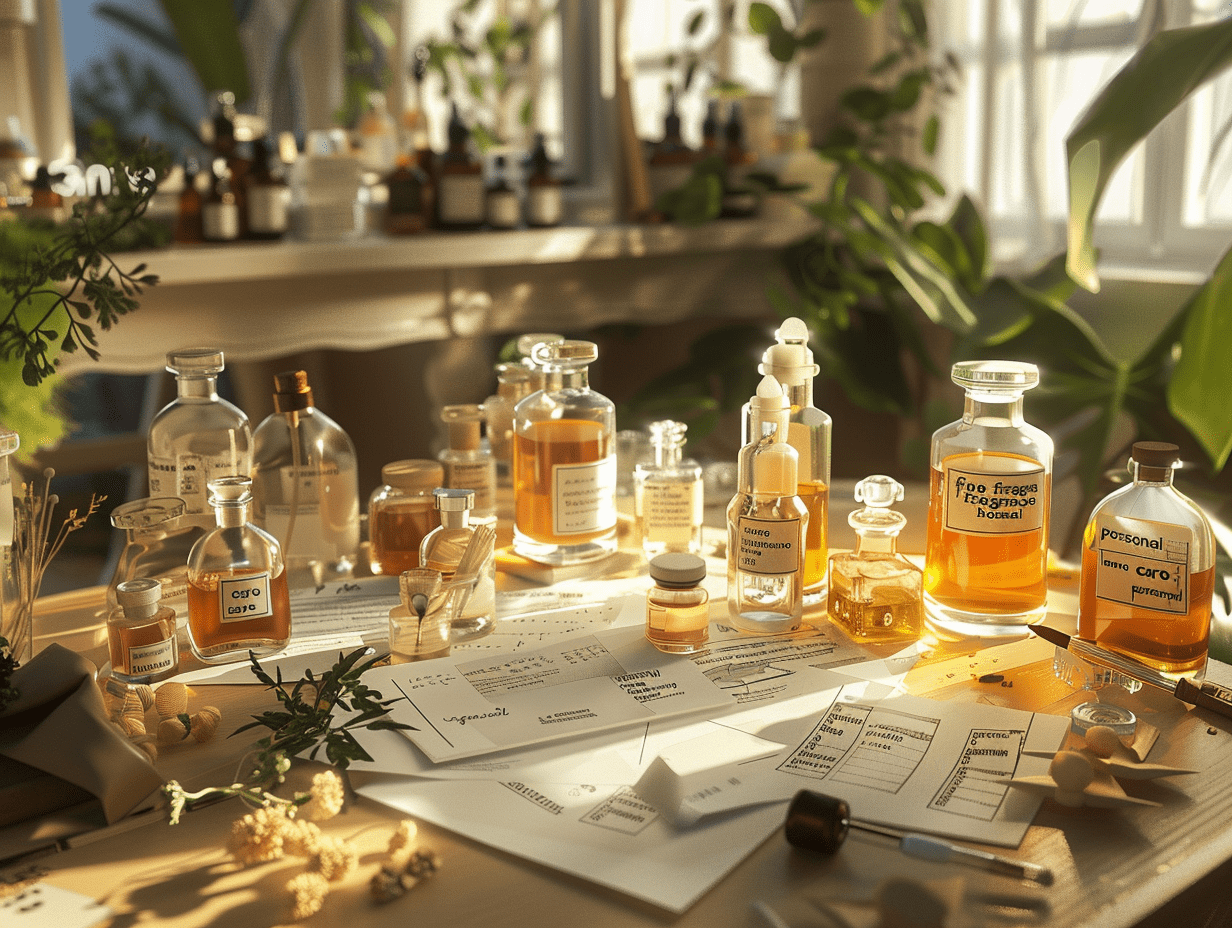
Behind every scent is a process rooted in both creativity and chemistry.
Fragrance Development Is More Than Just Mixing Oils
A great fragrance doesn’t happen by accident — it’s the result of a carefully guided process that blends brand vision, technical knowledge, and artistic intuition.
Whether you’re developing a fine fragrance, a home care scent, or a personal care formula, understanding how the fragrance comes to life helps you make better choices — and collaborate more effectively.
1. It Starts with the Brief
Every fragrance begins with a clear and detailed brief.
This is where you define your brand, your audience, your goals, and your ideal scent direction. It’s your compass throughout the process.
📌 What goes into a good brief?
-
Product type and function
-
Desired scent mood (e.g., calming, fresh, luxurious)
-
Performance expectations (longevity, strength, etc.)
-
Regulatory or ingredient restrictions (IFRA, vegan, etc.)
2. Initial Scent Concepts Are Created
Based on your brief, your perfumer will create 1 to 3 initial scent directions. These are starting points — not finished products.
Each option may explore different notes, structures, or emotional tones.
📌 You’ll receive:
-
Scent blotters or oil samples
-
Notes on each composition’s structure (top, heart, base)
-
Comparisons between options
This is where feedback becomes essential.
3. Feedback Loops Begin
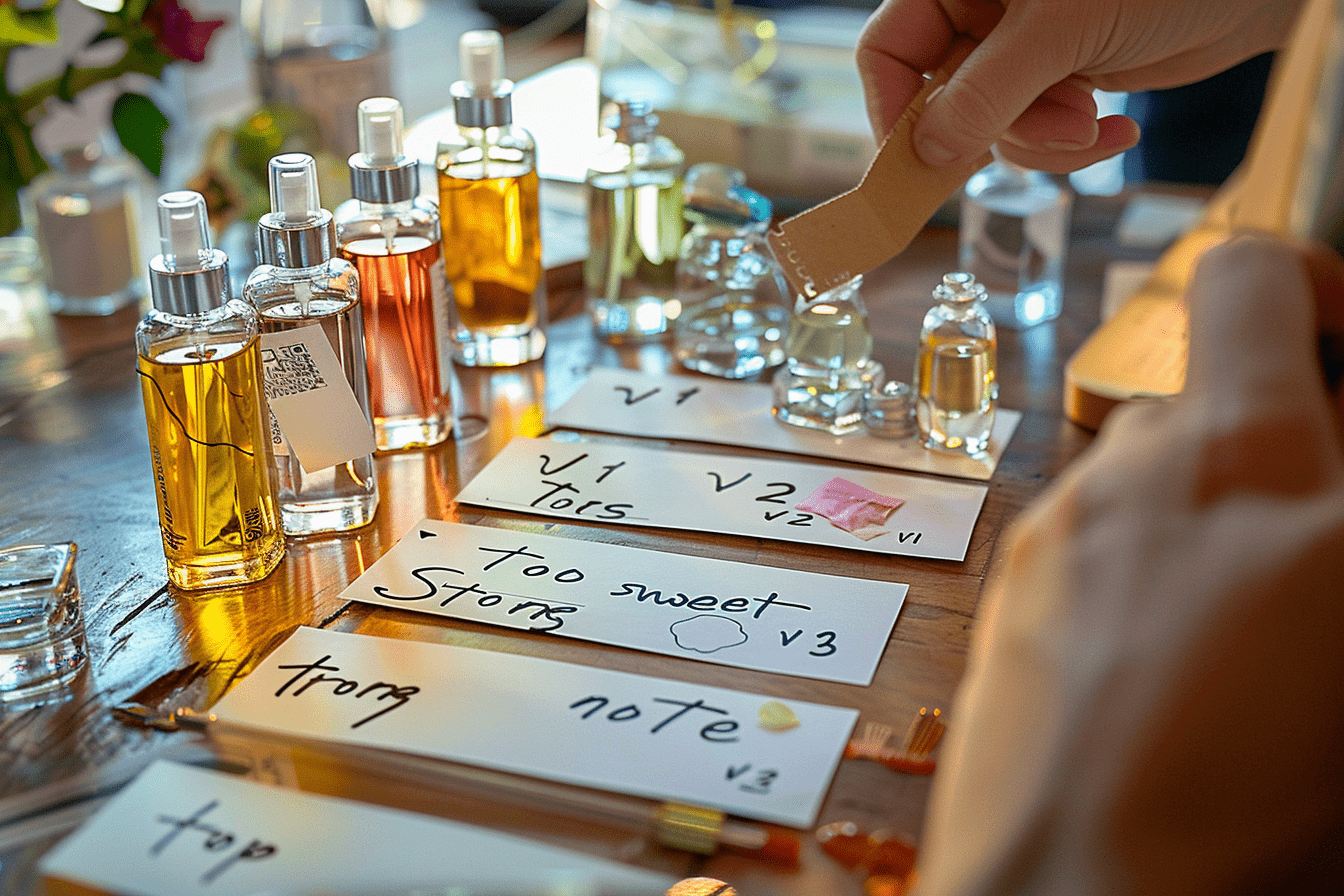
Fragrance development is rarely “one and done.” It’s an iterative process. You smell. You comment. The perfumer adjusts. Common adjustment areas: Making the scent more subtle or intense Changing the dry-down behavior Replacing specific notes (e.g., too floral, too sweet) 📌 Tip: Give clear, actionable feedback — and stay open-minded.
4. Performance & Compatibility Testing
Once a formula is close to final, it’s tested in its intended application:
Will it work well in a shampoo? A candle? A skin cream?
Tests may include:
-
Stability: Does it degrade in light, heat, or time?
-
Longevity: Does it last long enough in real-world use?
-
Material interaction: Does it work with packaging or base formulas?
Perfume Prime tests in-house and partners with external labs for GC-MS, IFRA verification, and stability checks when needed.
5. Finalization and Documentation
After rounds of testing and approvals, the winning formula is finalized.
The result? A custom-tailored fragrance that supports your product’s performance and enhances your brand identity.
📌 You’ll receive:
-
Final olfactive profile
-
Technical sheets (IFRA, allergen list, etc.)
-
Batch production reference
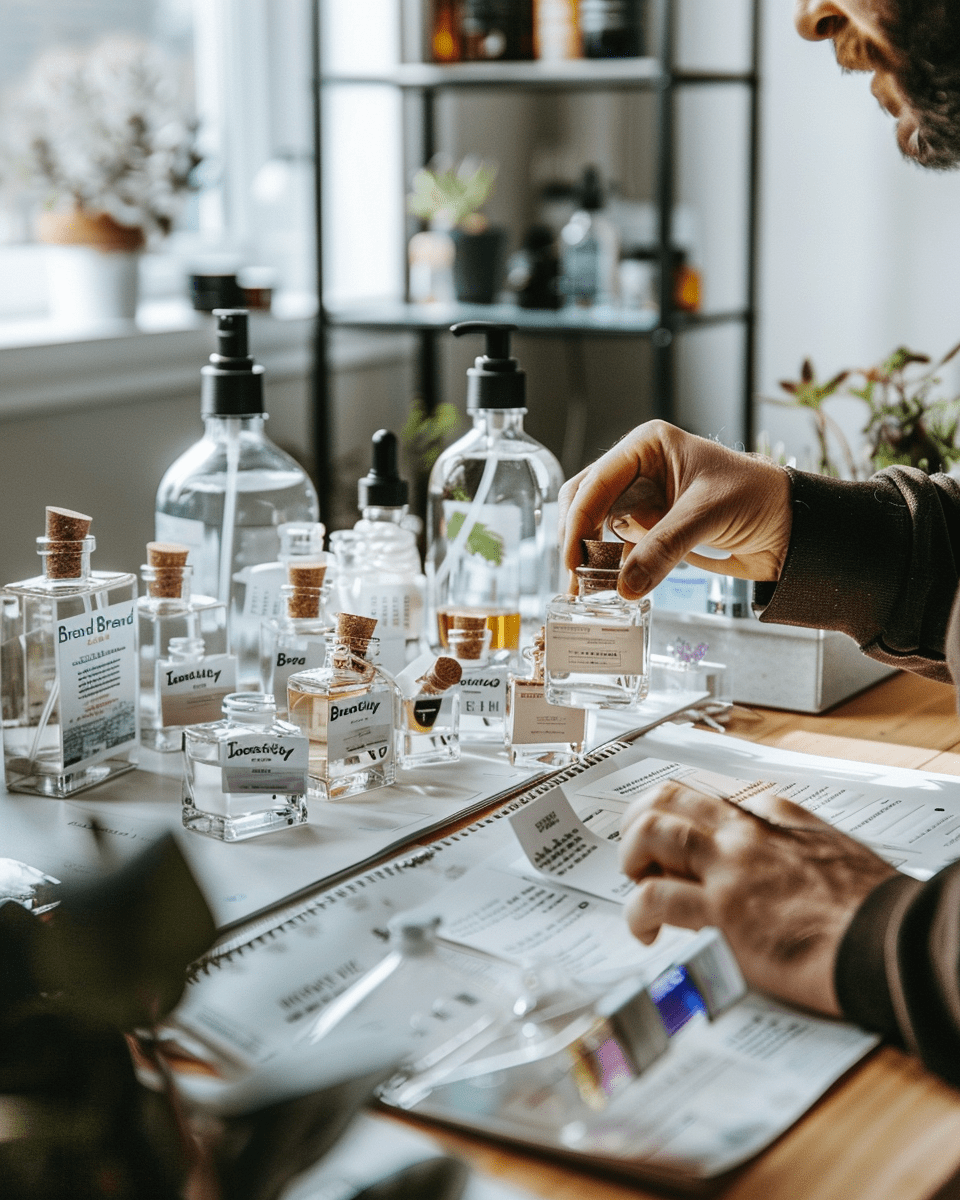
Final Thoughts: Creating a Scent Is a Journey
At Perfume Prime, we don’t just “make a nice smell.” We build olfactive identities that help brands connect with their audiences. The development process is collaborative, transparent, and made to serve your product’s real-world needs.